About Me

My photo
A concerned member of the human race

Thursday, July 17, 2014

"MESsing" with Education

nyt20100318_7a.jpg

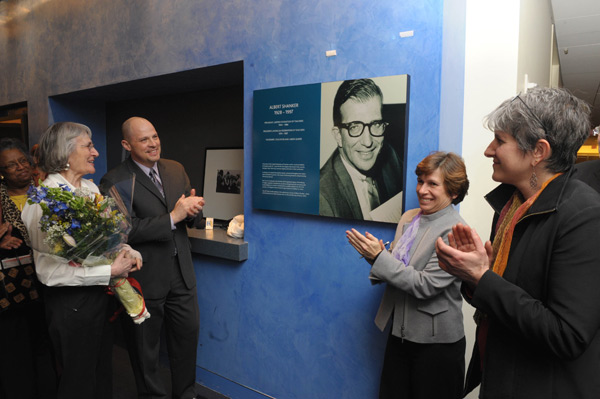
As I thought about the type of schools that might help some students the most, I remembered the brief experiment in my own city with M.E.S., More Effective Schools.  This experiment sought to create the first, in effect, "magnet schools."  Whereas the debate today focuses primarily on blaming ineffective teachers,  in the 1960s the debate led to a War on Poverty before Vietnam.  At the time, President Shanker's UFT aimed to help some of the most disadvantaged students with More Effective Schools.  

The More Effective Schools program began in September 1964 with ten schools, the old M.E.S.  These schools were created as laboratories for experimentation in helping some higher needs children.  Class sizes were set at fifteen in pre-K and twenty-two in the later grades.  There were teacher specialists (in speech, language, audiovisual and health, including psychiatry), team teaching heterogeneous grouping and more firm community relations and services.  The program was expanded in 1965 with the addition of eleven more schools, the new M.E.S.  

The experiment was a bold one.  Eighteen of the twenty-one schools were former Special-Service Schools in which students were significantly below average in academic achievement.  Teachers in the twenty-one M.E.S. were given a greater degree of latitude to make decisions and greater community participation was urged.  The program became controversial by 1968 and U.F.T. president, Albert Shanker, had his hands full trying to maintain funding and keep the program alive.  Short on cash, community districts wanted to shift Title I funds away from MES to other schools.  By 1972, it seems the program became a court issue and, then, a nonentity.  In one opinion I read, Shanker, himself, sacrificed the program and higher class size in return for higher teacher wages.  

Shanker hoped to attract white, middle-class students to the MES by advertising lower class size and greater services.  Indeed, he sent his own child to an M.E.S. pre-school.  (I admire when reformers are willing to put their own children through their experiments; you don't see much of that today!)  Some of the schools did include some mix of white and middle-class students.  With the advent of the Black Power movement of the late 1960s, Shanker ran into conflict with the community-based Planning Council of Ocean Hill-Brownsville.  Shanker's idea of greater community participation spun out of control as demands were made for community control.  Community advocates demanded a black curriculum and unbiased teachers.  MES was denounced as racist in its attempt to remake children into the "white" image of success.  Ocean Hill-Brownsville decided not to sign onto the program.

On top of these troubles, MES faced less than complimentary evaluations by the Center for Urban Education, CUE.  The 1967 statement noted that it was a "short-term" evaluation, not "definitive," as the schools had only been operating for a few years.  The schools were commended for excellent school climate and community relations, but no significant difference was noted in the functioning of children.  The biggest objection in the report seemed to be that teachers had not "revised techniques of instruction to obtain the presumed instructional advantages of the small class and the availability of specialized instruction.  In view of this, the lack of academic progress is not surprising."  The report further made note that the schools were elaborate and expensive "in terms of both money [$200/student] and professional time." 

In another 1967 critique of MES, Ms. Gloria Channon (an elementary-school teacher who joined MES) notes that "Again and again the fault seems to lie not so much with the machinery as with the people using it, or afraid of using it, or ignorant of the ways in which it can be used."  She sees the MES as a battlefield upon which the UFT, the B.o.E., civil-rights groups and a "fearful" white community contend.  And, she discusses how terms such as "black power" are infused with "emotional meanings, they do not, in themselves, possess." 

Channon criticizes rigid, uninspiring and sometimes quarrelsome teachers (including the poorly defined role of the "cluster" teacher) and administrators as well as insufficient funding (leading to sub-par libraries, for example).  The author notes that "gimmicks" such as overhead projectors are used as substitutes for real change in curriculum.  She criticizes the faith placed in guidance over necessary curriculum changes.  The author notes, however, that students could make gains in reading and those gains might never be picked up on a standardized test.  In her opinion, all too often, schools teach children that they are "dumb."  In one of the comments I found most perceptive, she stated, "When our feelings contradict our words, he [the student] judges us, and if we are lucky, instead of fighting us, he will tune out our words--as we, tragically, tune out his feelings."  

In 1968, another report by the C.U.E., using 15 "instruments" of measurement, including observations, surveys and test scores, basically slammed the schools again.  As in the 1967 report, control schools were used.  This time the study included 16 MES schools, seven control schools and  seven specifically Special-Service Schools, making for a total of thirty.  It was noted that MES schools had  "instruction at different levels," and an environment perceived as positive by parents, observers and other participants, yet an underwhelming lack of academic success.  According to the report, "This positive profile makes the lack of consistent progress in the academic areas disappointing."

It seems, and the reports even noted, the MES schools inspired passion by both supporters and detractors.  MES became a point of contention for Shanker in new contract negotiations and subsequent striking along with class size and issues of discipline.  The UFT issued a lengthy response questioning the 1967 C.U.E. report as a reflection of politics more than sound research.   The UFT questioned the test scores used as well as the control group.  The UFT noted that the MES schools should be compared solely to other Special-Service Schools, given the nature of the school populations.  The studies were not longitudinal; they did not track the same set of students.  (Indeed, one source, shows that for the 25% of students who stayed in the program, there was notable achievement).  The report criticized the fact that the twenty-two of the thirty-seven observers came from the College of the City of New York, making "inbreeding of ideas" a real possibility.  There was also no evidence in 1967 that any of the observers had experience in early childhood education.

Shanker had hoped at one time to expand the MES schools to three hundred.  After the MES schools failed, Shanker briefly romanced the idea of charter schools in 1988.  He became disillusioned here, however, realizing that charter schools might ultimately eat at the heart of pubic education, rather than help the neediest students.  

Our current UFT tries in limited ways to romance reform.  It has taken large grants from Eli Broad and partnered with Steve Barr to create its own charters. The last contract called for up to two-hundred PROSE schools as incubators for reform.   The PROSE schools, however, seem a far cry from the bold vision put forth by Shanker's MES.  But we do not know the full story, yet.  From the little we know, however, the reforms promise to be as affordable as they are disappointing.  One wonders if corporate reformers could ever jump on board with the big bucks for more meaningful, carefully planned, but entirely flexible, community-based reform in which the results would be judged by something more than stale test scores, percent of non-unionized workers, profit margin or degree of privatization.  Then, how far we might be able to take our students and our society!  It would truly be a public service.

I Must Not Question Corporate Rule


I found this cartoon online yesterday.  It's class-ic!

Wednesday, July 16, 2014

Finally Mulgrew Says What I Always Suspected!


I wasn't surprised when Michael Mulgrew remarked at the AFT Convention last weekend, "I have heard the stories about how Eli Broad and [Bill] Gates and a flying saucer full of Martians designed these standards."  For you see, I, too had long suspected that the Common-Core was promulgated by Martians.  I just wasn't sure whether it was one misguided martian or a  whole band of them.  

You might have been thinking the very same thing yourself.  After all, who, but space aliens, could have written and copyrighted the Common Core?  Ask yourself:


1.  Who, but space aliens, could have such low regard for our federal system of government so as to circumvent the reserved power of education with some tempting RttT bribes grants to disseminate the Core?

2.  Who, but space aliens, could have such little understanding as to the purposes of testing?  

3.  Who, but space aliens, could have such little regard for the social and emotional effects of over-testing on Earth children?

4.  Who, but space aliens, could try to link the Core to vast databases to deprive little children of their privacy?

5.  Who, but space aliens, could delight in failing 70% of Earth's NY student body?

6.  Who, but space aliens, could believe it's either their copyrighted standards or no standards at all?

7.  Who, but space aliens, could try to lull humans into focusing upon conceptions of college and career readiness when there are too few well-paying careers left, college is too expensive and the planet is going to pot?

8.  Who, but space aliens, could have such a lack of understanding of early childhood development?

9.  Who, but space aliens, could delight in profiting from the development of tests that make students "wee" on themselves, vomit, bang their heads, cry and just plain give up?

10.  Who, but space aliens, could want to take down students, teachers, administrators and schools, in one foul swoop?

How could aliens not have constructed this Core?  Ask yourself that question.  Pretty soon we may start to see pro Common-Core commercials paid for by this guy:


Tuesday, July 15, 2014

Due-Process Rights of Tenure Protect Teachers' Rights to Protect their Students


Most teachers join the profession to help children.  In the first few years on the job, teachers are often "learning the ropes," working tirelessly to create lesson plans from scratch, prepare for observations, please their supervisors and keep their heads above water.  Teachers without tenure are usually least likely to question school policy or stand up for students' rights.  

Teachers need tenure.  It guarantees the due-process rights which are particularly important in a field in which the safety and health of public-school children are at risk.  Too often, a teacher questions some school policy, some safety issue, or, perhaps, whether the state-mandated services for special-needs students are being given, and then the harassment begins.  Without the due-process rights of tenure, teachers may be summarily dismissed for trying to protect the interests of students or the school in general.

Some administrators are petty.  Some will use their power to intimidate and, ultimately, if possible silence critics, watchdogs or whistle blowers.  In one of the more outlandish examples, in an ongoing story, a Manhattan principal has been repeatedly accused of fabricating letters of complaint against teachers, accusing them, in some cases, of pedophilia.   I do not know whether he is guilty or innocent.  I am glad that he and any of those whom may have been victims of his accusations, however, share in a system that respects the due-process rights of the accused.

Tenure is so important for so many reasons central to teaching.  Tenure protects academic freedom.  So many ideas that now seem commonplace had to be championed in the past through trials by fire.  In the past, female teachers were fired for getting married or becoming pregnant.  Teachers were fired for refusing to take loyalty oaths.  Today, teachers are more likely to be targeted, it seems, as they become more expensive to employ, especially given the current practice of applying business-minded principles of cost cutting to education.  Tenure protects teachers from vindictive students unhappy with their grades.  Tenure protects teachers from principals who wish to use their positions as patronage machines.  

If the due-process rights of tenure are stripped away, it may be quicker and cheaper to fire a few perverts who have already been removed from contact with students, but it will also be easier to fire the innocent and intimidate all those who might otherwise more easily stand up for the rights of students.  It will also accentuate the loss of dignity in the profession and cause many worthy candidates to turn away.  I can promise you, if tenure is revoked, much more harm than good will come of it.  Teachers will suffer, but their students will suffer even more.  

Monday, July 14, 2014

Can the Common Core be Anything but a Bad Apple?

The Almighty Arm, Architect of the Common Core:  The Hand with a Brain to Make Standards For All!

The AFT stopped far short of a full condemnation of the Common Core at its conference.  I kept going.

I ask myself, who wants the Common Core?  

Some answer, people who want standards.  But don't they know, we have standards.  New York State, in my opinion, has had some pretty fine standards in its history.  The problem is that many people cannot meet them.  Raising the standards will not make the task any easier.  I have seen standards lowered for political purposes.  I now see them raised for political purposes.  I want to teach children, as I have done for twenty years, and not primarily cater to the current needs of politicians.

Some politicians crave the Core.   I ask myself, why?  Perhaps it is much easier to blame teachers for poverty, then to understand how poverty presents huge obstacles to a child's success in school.  Perhaps it is much easier to use teachers as scapegoats than to examine why more and more people cannot find jobs with paychecks to pay their bills.   

Ed. Companies love the Core.  Do you see the dollar signs in their eyes?  If you can market the same set of materials nationwide, profits will skyrocket.  One textbook and one test for all!  In our federal system of democracy, states are supposed to be laboratories for experimentation.  Education is a reserved power.  Schooling should grow out of community needs.  States should write their own standards.  To anyone who asks, what are you going to do when someone moves from California to NY, I will say most of my transfers come from other countries, not other states.  I will teach a kid from California, just as I will teach a student from China, the standards of my state.  

Some data miners love the Core.  InBloom has been defeated, but we all know that some incarnation lurks in the shadows, waiting for a moment of weakness to strike again and exploit the data of little children.  I don't want Big Brother, with a few items to market, tracking my children or anyone else's children and storing the data for all time.  

The Core can be used to strike at educators under the name of test-based accountability.  Teachers and schools will be held accountable for the scores of their students.  Teachers will be blamed for low Common-Core test scores.  Public schools will be closed and charters will be opened, as per the policy of Secretary Arne Duncan.  Some charters pursue profits.  Others just have directors who earn more than the President of the United States.  

People who don't mind more test prep may welcome the Core.   Instead of growing up experiencing by doing and learning the joys of socialization through play, little children are learning how to sit for hours under the pressure of testing conditions, lost in a sea of endless bubbles.  Even at the Success Academy, I read teachers are handed materials to clean up vomit during the big tests.

I know a lot of people who got nifty grants from Bill Gates probably love the Core.  I'm sure they'd love to write some more grant proposals as they sign away the future of other people's kids.

It seems a short a trip from U.S. Common Core to World Core, academic imperialism based on the enforcement of one set of P.I.S.A.-based standards, again, worshiping at the altar of the almighty test.  The U.S. can offer fantastic grants, thanks to the funding of Bill Gates, to promulgate international standards.   Then, we'll blame teachers in countries with the lowest per capita income for the scores of their students!  We can just close their countries down and send in profiteering charter companies to take over.  Oh, how the ed. companies will wallop us and win big!  

In my mind, there are many reasons why I do not want the Core.  It is an abstraction written by people with little experience in education or child psychology.  Students will be told early and often that they are failures.  Our 2013 NY State tests are a testament to that.  Cut scores were set to fail seventy percent of students taking the test.  The Core is a distraction from the real problems of our society, another gladiatorial game in which teachers, this time, are the ones being thrown to the lions.  I am not without my own standards, but they are not those of the politically charged Common Core. 


Sunday, July 13, 2014

A Preview of the 2014-2015 Catalog Created by Educational Deformers, Inc.


As technology in the classroom is constantly updated, we mustn't forget the tried and true solutions of the past.  Keeping this in mind, here is the 2014-2015 Catalog by Educational Deformers, Inc.  Peruse some popular items for dealing with unruly and ineffective teachers.  Order now while supplies last.   

1.  Pictured at top, a handsome pillory.  Able to accommodate most teacher sizes.  Optimal for public humiliation of public-school teachers.  Historically, pillories have been used to combat crimes such as treason, witchcraft, drunkenness and, now, teaching in poor neighborhoods with low test scores.

Did someone on your staff commit a higher offense?  Purchase the upgrade.  Available for instant shipping as well as pickup.  


2.  A hot new item with a name brand.  T is for Teacher.  That's good enough for me!  Let the world know of that filthy, vile attachment to a profession that pretends to do service to little children.


3.  For those faint of heart, The Scarlet-Letter version.  Let students know the shame of being a teacher as well as your familiarity with the 19th-century works of Nathaniel Hawthorne.  Never have erudition and humiliation gone so far together, hand in hand!


4.  The teacher dunking chair saves the trouble of routine procedures of due-process and will work well in the post-tenure world.  If teachers are innocent, they will drown.  If they are guilty, they will survive long enough to be stripped of their license, livelihood and dignity.  This product can serve the dual purpose of teaching legal lessons as well as principles of physics!

5.  This particular device, pictured below, will stop divisiveness among staff.  Teachers are discouraged from sharing their opinions in this highly fashionable taste of medieval life.


6.  Go retro again in this upgrade, known as "Scold's Bridle," from the 1500s in Britain.  Let your teachers know that no nonsense will be tolerated.  For fifteen dollars more, add to the shame of your educators by adding the optional bell to the top. 


7.  For those who prefer an Asian twist, straight from China, a new addition to your elementary-school playground.  Never will the children have so much fun at recess at the expense of the teacher, that is, if they're common-core aligned enough to have earned recess.


8.  The wooden collar, or cangue, from China may appear harmless enough.  See below.  Yet, depending upon the APPR scores of the less than effective teacher, boards of different weights may be purchased.  Just imagine trying to eat, sleep or lesson plan with this encumbrance!  Note:  the plank serves the dual purpose of chalkboard.


9.  Maybe one of your teachers failed to impress you, but it's never to late to press them.  Note: boulders not included.  We recommend the use of Common-Core-aligned science and social-studies textbooks.  Call Pearson for details.   


10.  And, for school's whose budgets are tight, we have a time-honored classic:  The Dunce Cap.  It would be cruel to put it on the head of a student, but that shouldn't stop you from buying one for a teacher!


Saturday, July 12, 2014

Pre-K: Will the Promise be Broken?


A story in the NY Times entitled "Less than Half of New York City's Applicant's for Pre-K Get their Top-Choice School" pointed at one of the many growing concerns over publicly-funded pre-K in the City.  Some children only receive their fifth or twelfth choice.  

The logistics of the whole operation seem daunting.  Now that the City is forced to pay for the rent of charter schools, in an already overcrowded educational system, the City is strapped for locations.  It seems many potential sites have building-code violations which is no surprise given the report on outstanding violations in other school buildings last year.  Of the already 281 approve pre-K building sites, 53 had open building-code violations last month, eighteen of which were serious.  I suspect a number of these may have been cleared in the interim.

Initially, publicly funded pre-K seemed to be a great way to jump start a child's education.  I have personally witnessed three little sponges under my care soak up knowledge at that age.  I would hope all children could have a rich and rewarding environment in which to grow.

I am fearful though that the new pre-Ks, instead of enriching children and encouraging them to explore in different directions, will become common-core aligned test prep centers, preparing students to be a compliant work force, expecting little because they have spent their whole lives failing Pearson-concocted tests with cut scores set by "The King."

Eva Moskowitz and other charter operators will push their way into the market.  Students may be subject to stringent disciplinary rules and exiled for their inability to sit down and shut up.  Pre-school may not be the loving, nurturing environment we would all want for our own children.  It may be a reflection of educational deformity.  It may prove potentially dangerous with building-code violations and deadly with common-core adherence.

Friday, July 11, 2014

If Tests Could Talk


The NY State Board of Regents has a long history, dating back to 1784.  It first administered exams in November of 1866 to determine the readiness of students for high school.  In 1878, exams were administered to high school students as measures of college readiness.  The Regents grew from five exams (American History, Latin, algebra natural geography and natural philosophy) to 42 by 1879 (given in November, February and June).  Between the Twenties and the Seventies, Regents administered vocational exams.  The Regents continues to change.  Exams are more comprehensive.  Foreign language has been eliminated and Common Core has come along (algebra and ELA in 2014).  

Beginning in 1884, the State developed syllabi and teacher's guides to accompany the tests.  The tests used to arrive at schools with feedback slips.  Teachers were encouraged to make suggestions and asked to collaborate on future exams.  Teachers played an integral role in the creation of past tests.  Beginning with the Action Plan in 1984, schools with low test scores (often in impoverished neighborhoods) were placed under "registration review" due to shortcomings in their Comprehensive Assessment Report (CAR).  NCLB and RttT placed an even greater emphasis on tests as measures of school accountability. 

If one wishes to find examples of old exams, many are only a few clicks away.  One can find last June's exams as well as some dating back to 1934 online at nysed.gov.  I have personally administered the Global Studies Regents (given 1989-2000), Regents Competency Tests (easier versions for people who could not pass the Regents) and the more recent Global History and Geography Exams with the document-based question.  At NYSED, I found samples of other exams, including Physical Geography (1934-1940), American History 1,2, and 3 (1934-1969), World History (1950-1968), Citizenship Education (for eighth-grade students in the 1950s), Social Studies (1968-1988) and Asian and African Culture Studies (1976-1977).

The greater part of the World History exam (1950-1968) dealt with European history.  There were some surprising questions.  A January 1952 question asked students the name of the author of On Laws of War and Peace (Hugo Grotius).  Then, there were some questions more familiar in this day and age, the old quotation from Kipling's "The White Man's Burden" which seems to make it onto the exam every other year.  

The American History exams came in one, two and three-year versions, including "American History and World Backgrounds" (which included diverse topics like the Piedmont in Italy).  The 1934 exam had no multiple choice.  It was printed on three pages (as opposed to twenty plus today).  Students were asked to do things like distinguish between terms like "petit jury" and "grand jury" and rearrange items like "Demonetization of silver," the "Bland-Allison Silver Purchase Act" and the "Discovery of gold in California" in chronological order.  

Later exams were structured differently.  The 1938 exam included multiple choice.  In subsequent tests, there might be as many as 40-55 multiple-choice questions.  There were also true and false, fill in the blanks, reading passages and graphs.  The writing questions demanded student knowledge, but in many cases more than memorization.  

I really loved some of the old writing questions.  Students were asked to  use facts to defend their opinions on important issues.  I wish we could see ones like these on our history tests today.  A 1945 exam choice asked to what extent WWII promoted racial understanding.  An August 1949 question asked students to respond to whether the "budget of our federal government should be reduced."  A January 1955 questions asked students to defend a position on the "Developments in the field of atomic energy have increased the military security of the United States."  One January 1957 question asked:  "Is television improving the cultural standards of American people?"  

The tests seemed to include more current events than tests today.  The June 1935 exam asked students to compare the Panic of 1873 or 1893 with the Panic of 1929.   A 1936 exam asked about the Constitutionality of parts of the New Deal.  The January 1937 test asked about Jesse Owens.  The June 1938 exam asked about Amelia Earhart.  The August 1938 exam asked about Manchuria.  The January 1942 exam asked about the Lend-Lease Act.  The 1943 exam asked about the financing of WWII.  A January 1967 question asked about the Great Society.  An August 1966 question asked students to write a letter to the editor of a newspaper in response to "The United States should maintain its present policy in Viet Nam (1965)."  I found this surprising given that Shanker's UFT did not tolerate debate on Vietnam within its delegate assemblies at that time.  

There were some terms I had to look up as I scanned the exams.  I did not know about Lewis Lawes and his prison reform (Jan. 1937 exam).  Then, there was a question about the Ives-Quinn Act of 1945.  I googled it.  It was a NY state law that created an executive-department commission to  try to stop discrimination based on race, creed, color or national origin by employers, labor and other agencies.  Indeed, past exams had more questions on NY state history, "reciprocal trade," economics, in general, and the Labor Movement.  

I wish our tests today could promote the same critical thinking about current issues.  We are missing the opportunity to create the kind of engaged thinkers who will make more informed citizens. We are requiring students to know information, but we are not asking them to apply it in meaningful ways to the issues of today.  I also wish vocational training or career training would make a resurgence, regaining its former stature.   

If tests could talk, I feel sure they'd ask not to be used as weapons to take down students and teachers or as political tools for the harassment of a profession, Arne Duncan's "white, suburban moms" or a whole generation of young minds.  The tests might ask to be filled with more questions that ask students to take informed positions on many issues, including current ones, even those surrounding education.  

They might ask students to take a stand on charter schools, Common Core, tenure and the like.  Sadly, there is too much top-down imposition of policies today and not enough toleration for debate or independence of thought.  Sadly, there seems to be too much money buying ill-thought out public policy, sometimes for personal profit.  We are living in a neo-Gilded Age.  Compare it to the late 1800s in America.  Put that on your test and think it!

Thursday, July 10, 2014

PROSE and Cons?

Sixty-two NYC schools have been chosen from 107 applicants to become PROSE (Progressive Redesign Opportunity Schools for Excellence).  As per the new contract, the City could establish up to 200 of these schools in cooperation with the Union.

PROSE are given a wider latitude to operate outside of union rules and City regulations.  They can pursue different policies for selecting and evaluating teachers and handling grievances.  They also have the freedom to experiment with the length of the school day, staggering school days, changing class size and utilizing small-group instruction, among other things. 

The schools are supposed to be laboratories for experimenting with reform.  The Union claims they are not charter-school wannabes.  Jenny Sedlis of StudentsFirstNY affirms the fact that these schools are not charters because they lack a wider latitude to do things like demolish seniority rights and tenure.  

Schools had to receive at least 65% approval from their staff in order to make the transformation to a PROSE.  According to the UFT, schools approved to become PROSE voted overwhelming in favor of the change, as high as 95% in half the schools, and over 80% in a "vast" majority.  Yet, the staff in ten of the 72 schools approved jointly by the D.o.E. and the U.F.T. failed to approve the plans.  

Of the 62 PROSE, the specifics of the reforms to be enacted have only been spelled out in three schools.  Some of the changes involve staggering start times for students in different grades, changing evaluation procedures and allowing the use of the kitchen to help students learn about healthier food choices.  In and of itself, these changes don't seem to be on the scale of the type of reforms needed to best help students succeed in life.  I guess we will need to wait and see what the other 59 schools have in mind.  

It's my guess that the success of these schools will be limited compared to some of the most "successful" charters as long as PROSE cannot screen out applicants, expel others and function in ways contrary to the mission of a true public school or redefine success to mean something with standards very contrary to that of traditional test score measures or most measures of "college readiness."  

Let us hope that PROSE will be anything but prosaic which Mr. Google defines as "having the style or diction of prose; lacking poetic beauty; commonplace; unromantic."  

If I could open a school for experimentation, I would propose ideas which seem to have fallen out of favor today, ideas that basically represent renewing respect for teaching as a profession and affording students better learning conditions:

1.  Cut class size so that teachers can better focus on the needs of the student before them.

2.  Offer more services to make sure that the needs of students outside of school do not interfere with their ability to reach their potential in schools.

3.  Offer students a wider variety of learning options, including more music, art and drama as well as vocational training with links to real-world employment.  

4.  Stop concocting tests to purposefully fail students, simultaneously cutting down their egos and those of their parents in an attempt to "prove" that teachers suck and parents dote overly on their little dullards.

5.  Stop attacking the protections of teachers, including the due-process rights associated with tenure and seniority protections that denigrate experience in favor of a cheaper, more malleable workforce.  

6.  Pay teacher salaries at least comparable to that of the suburbs to attract and retain better teachers in the City.  In the best of all possible worlds, and in my wild imagination, since the conditions are more challenging, City teachers might receive even higher pay than those in the suburbs.  

I know these ideas will not gain favor with many due largely to cost and the fact they counter the simple solution of using teachers as scapegoats.  In my mind, however, these ideas put into action would be anything but prosaic.  They might even become poetry.


Wednesday, July 9, 2014

School Collocations: Something Seems Imbalanced

When I hear about some strange school collocations, I have to wonder what might lie ahead.  

1.  How about the collocation of Harlem Success Academy with the Pubic School for Success Academy Rejects?

2.  How about the Charter School of Excellence in Test Preparation being collocated with the Public School Scheduled for Closing Due to Poor Test Performance?

3.  How about the Charter School for Spiffy Uniforms being collocated with the Public School for I Don't Have Paper or Pen Again Today?

4.  How about the Charter School for Ha, Ha, We've Taken Your Dance Studio, Library and Third-Floor Bathroom being collocated with the Public School for Dwindling Resources and One Bathroom For the Multitudes?

Charter Schools: Education on Steroids?

I understand parents want the best for their children.  I understand that charter schools sometimes offer students options preferable to a public school.  They can enforce a stricter set of rules and may focus on raising test scores.  But I also understand that charter schools are ultimately harming the public's health.  In this way, they are like education on steroids.

Proponents of Charters, funded privately as well as publicly, cling tenuously to the premise that their schools are public.  

Yet, charters can screen out certain students and expel others, further contributing to segregation in society.  Truly public schools serve all segments of society, including children with special needs and children who do not speak English. 

Some charters collocate, taking vital space from public schools.

They have not been subject to the same oversight as public schools, sometimes leading to highly questionable practices.

Some charters hold protests, friendly to their own interests, but harmful to the public's, which students are required to attend during their school day.

Charters may site excellent academic performance without informing you of all the children removed from the school.  Often, they obtain test scores no better than that of public schools.  

Whereas NYC public schools cannot grade their own Regents papers due to fears of cheating, charters apparently are immune to suspicion. 

When NYS made laws against excessive test prep, they did not apply to charters--who love to site their great data--which in reality is sometimes quite lackluster.  According to the latest calculations, the Success Academy had a 56% attrition rate.  Despite the uneven playing field, Success Academy eighth-grade students failed to secure the top test scores necessary to secure seats in the City's top high schools, including Stuyvesant, Bronx Science and Brooklyn Tech.   This is the strange new world of education on steroids!  

Tuesday, July 8, 2014

How Will We Know Who is "Grossly Ineffective"?


In the wake of the Vergara decision in California and the copycat cases pending in the hopes of destroying teachers' tenure nationwide, I look around me and wonder how we will be able to identify the "grossly ineffective" teachers.  Here are some hints:

1.  Look for "grossly ineffective" teachers working in public schools in impoverished neighborhoods.

2.  Look for "grossly ineffective" teachers working in schools with a disproportionate number of students with special needs.

3.  Look for "grossly ineffective" teachers working in schools with many immigrant children who are only now learning the English language.

4.  Look for "grossly ineffective" teachers working in City schools where students are sitting in overcrowded classrooms or trailers and the teacher-student ratio is very high.

5.  Look for "grossly ineffective" teachers working in underfunded classrooms across America.

6.  Look for "grossly ineffective" teachers among the lower paid persons in the profession, working to help the sons and daughters of lower paid workers in America.  

7.  Look for "grossly ineffective" teachers in classrooms where students spend more time developing social skills, creativity and an understanding of current events, rather than prepping for tests. 

Look into your own heart.  If you work in situations fitting any of the descriptions above, you might have mistaken your gross ineffectiveness for a do-good impulse to help where your help is needed most.  You're sorely mistaken!  Don't let your gross ineffectiveness further destroy the lives of your students.  It's time to turn yourself in!

Don't even think of looking for a "grossly ineffective" teacher among the T.F.A. or in a charter school though.  If this thought even crossed your mind, you know what, you're hopelessly "grossly ineffective"!  


Monday, July 7, 2014

The Grapes of Math


The following is a quote from The Grapes of Math, a new novel dealing with a young math teacher's trip from North Carolina to the promised land of California.  Once, there he soon hears of the Vergara decision.  

Ma Joad:  How am I gonna know about ya, Tommy? Why they could fire ya without the due-process rights of tenure and I'd never know. They could hurt ya. How am I gonna know?

Tom Joad: Well, maybe it's like Casy says. A fellow ain't got a classroom of his own, just little piece of a big classroom, the one classroom that belongs to everybody, then...

Ma Joad: Then what, Tom?

Tom Joad: Then it don't matter. I'll be all around in the dark - I'll be everywhere. Wherever you can look - wherever there's a test with cut scores set just so kids can fail, I'll be there. Wherever there's Campbell Brown beatin' up a teacher who may very well be innocent, I'll be there.  I'll be in the way parents tell Commissioner King what they think about his Common-Core tests.  I'll be in the way kids laugh when they come to school with minds like sponges and there's good stuff to soak up that doesn't go by the name of test prep, and when the students are seen as whole persons rather than test scores and strivin' in schools that are better funded, rather than closed - I'll be there, too.

Sunday, July 6, 2014

Vissi D'Arte!

Chancellor Farina announced the other day an increase in funding for arts in N.Y. City's public schools.  This is far more meaningful for children, I am sure, than billions spent on testing. 

Saturday, July 5, 2014

News Flash: Compelling Evidence Confirms that the Fall of the Roman Empire was Caused by Grossly Ineffective Teachers


My Life in Court


When I decided to become a teacher, I never imagined I'd have a sword like the one pictured above hanging over the head of my profession and see the balance weighted against public education by thirty pieces of silver on one side.  My profession, indeed, the very foundations upon which my livelihood rests, have come under constant attack in court.  

In a short span of time, one's head could spin from all the court cases.  First, there was the Vergara decision of June 10th, bankrolled by a Silicon Valley magnate named David Welch, living in Atherton, California, the wealthiest  zip code in the U.S.  In this case, a Los Angeles Superior Court judge decided that California's tenure law threatens students' basic rights to a sound education by shielding "grossly ineffective" teachers.  

Most of the poorest teachers seem to work with the poorest students!  The court didn't say how we could distinguish between "grossly ineffective teachers" and the grossly inadequate conditions in which some students live.  How convenient to deal in logical fallacies and equate correlation with causality.  Who could truly believe that the most glaring thing that separates inhabitants of Atherton from those of an inner city is a handful of "grossly ineffective teachers"?  Yet, some of the wealthiest come down from their mansions on the hill to lead this witch hunt with torches in hand.  They take it into a land in which teachers dedicate their lives to trying to help some of the neediest children in overcrowded, underfunded schools!  At least one of the "grossly ineffective teachers" they pounced upon turned out to be a former Teacher of the Year.  The Vergara decision will surely be appealed and one hopes sound logic will prevail.

Then, there is the case of Harris v. Quinn, decided by the U.S. Supreme Court this week, striking a qualified blow at unions.  The plaintiffs in this case, home health-care workers in Illinois, used the First Amendment to attack the power of unions to collect proportional "fair share" fees from individuals who do not join the union, but still benefit from collective bargaining agreements.  Although the nurses won a victory, the decision stopped short of knocking down Abood v. Detroit Board of Education (1977) which allows 26 states to require their public-sector employees to pay union dues.  The home healthcare workers were identified as something different from full-fledged state employees.  It was stated that the decision therefore cannot apply to all public-sector unions.  Who knows though when this issue will be revisited again?

I saw some good news coming out of the courts in Chicago the other day.  The Illinois Federation of Teachers and the American Federation of State, County and Municipal Employees and other unions sued to protect the rights of public-sector employees to their pensions.  In Kanerva v. Weems, the Illinois Supreme Court upheld the Pension Clause in the Illinois State Constitution, stating that the benefits "cannot be diminished or impaired," including health benefits.  Hallelujah!  Good news seems hard to find.

In one last piece of news, I read that the NYC Parents Union, led by Sam Pirozzolo and Mona Davids, has filed a suit on behalf of 11 students in Staten Island, challenging the tenure of NY teachers.  If anything, suits like these will cause more talented teachers to flee the most challenging schools in even greater numbers.  As it stands now, the teachers working in impoverished neighborhoods often do not stay long enough to earn tenure.  Who wants to be a sitting duck with none of the due-process protections of tenure?  How many will wish the swift sword of "justice" to fall upon their heads for trying to help students living in poverty, some with disabilities, and others with language deficiencies, succeed amid inhospitable conditions?  Who wants to be a martyr?  How about Mona Davids and Sam Pirozzolo?  How about David Welch?  


Friday, July 4, 2014

Happy Fourth!

This July 4th in NY there are a lot of summer patriots, minus much of the sunshine.  Two hundred and thirty-eight years later, it's strange to think that only a third of America's colonists wanted independence.  Another third preferred loyalty to Britain.  The remaining third either couldn't be bothered or just waffled.

When I was an eleventh grader, I found an unlikely hero in John Adams.  He was introduced to me through the film 1776.  Sometimes, I still here him ask, "Is anybody there?"  The answer has always been "yes."

Sherman Edwards, who briefly served as a high-school history teacher after returning from WWII,  wrote the music and lyrics for 1776.  Edwards, majored in history at NYU, but made his name as a jazz pianist, playing with the likes of Benny Goodman, Tommy Dorsey and Louis Armstrong.  He also wrote music sung by Elvis Presley in several of his films.  When Edwards decided he "wasn't into the rock songs any more," he left to write 1776, the winner of 5 Tony Awards in 1969, including Best Musical.  The play also won the  NY Drama Critics' Circle award that year.      

The actor William Daniels as John Adams

I suppose there are still lessons to be learned from the American Revolution.  Our experiment in democracy is constantly evolving.  People's liberties may come under attack at any place and time and in many different forms.  And when the odds and even an empire are against you, the future may still be bright.  People may one day celebrate your feat--two-hundred and thirty-eight years later.    

Let me conclude with some famous words by the radical Thomas Paine, the man who made even Jefferson seem relatively tame.  Despite their age, these words seem no older than the day they were written.  

When it can be said by any country in the world, my poor are happy, neither ignorance nor distress is to be found among them, my jails are empty of prisoners, my streets of beggars, the aged are not in want, the taxes are not oppressive, the rational world is my friend because I am the friend of happiness. When these things can be said, then may that country boast its constitution and government. Independence is my happiness, the world is my country and my religion is to do good.” 


Thursday, July 3, 2014

The Truly Twisted Life of Educational Deformity


There was an article in the NY Daily News yesterday entitled, "Homeless student numbers leap during 2012-2013 school year:  report."  There are close to 77,000 school children living in temporary housing.  This represents a 16% increase from the 2010-2011 school year.  The article points to several possible explanations, including the economy, increasing rents, better record keeping and Hurricane Sandy.  Happily, "grossly ineffective" teachers did not make the list.  

The New York Times also elaborates on the situation in "Public Schools in New York City are Poorer and More Crowded, Budget Agency Finds."  At the same time as the poverty is on the rise, 450,000 students find themselves enrolled in overcrowded buildings.  Class size has been increasing.

The self-anointed, so-called educational "reformers" have been so off the mark.  Michelle Rhee argued that if students could only have three good teachers in a row they could free themselves from a cycle of poverty.  I suppose there's beauty in simplicity, but one would have to be a simpleton to accept that argument.  It also has convenience, I suppose.  By targeting teachers as scapegoats, other segments of society are shielded from potential blame.  Teachers make an easy target, especially if they can be caught off guard by such stupidity.  Teachers are used to helping other people, not defending themselves.     

The Ed. reformers have tried so many ideas and failed.  Small school sizes did not work.  Charter schools, so far, only seem to succeed to the extent that they are not truly public: they exclude some students and kick out others.  But while there's profits and whopping salaries to be made, some charter operatives will pour their millions into false advertising and paint themselves as Mother Teresas.  

One might as well put a clock on each and every far-fetched "brainy" idea of the educational "reformers," and see how long it takes before it fails.  Common Core will not shock students into meeting higher standards when many still struggle with the current standards.  Over-evaluating me will not help either.  If I am truly ineffective, one doesn't need six observations to conclude that.  Just open your eyes and ears to the line of students with complaints and parental phone calls.  If I am effective, let me teach in peace as a trusted professional.

Schools reflect society's problems.  They do not cause them.  If students' basic needs are not being met outside of school, learning becomes very difficult.  More than at other times, students need to feel secure in classrooms of a smaller size.  They need more individual attention, care and comfort alongside the academia.  All of this seems like common sense to me, but, then, in these days of educational deformity, I often find myself falling back on the words of Voltaire:  "Common sense is not so common."

Wednesday, July 2, 2014

Our National P.T.A.


I was reminded the other day of the sad fact that The National PTA (Parent-Teacher Association), like the AFT (except here, the tune is to over $5 million) has accepted extremely generous grants from the Bill and Melissa Gates Foundation.  The National PTA says it "has not received funding from any association to advocate for the Common Core State Standards."  Yet, oddly enough, the Gates Foundation will tell you that $499,962 was granted specifically to "educate parents and communities on the Common Core Standards and empower leaders to create the changes needed in their school systems." 

So, I rewrote a song...


Our National P.T.A., 
Based on "Harper Valley P.T.A.," (as sung by Jeannie Riley and written by Tom T. Hall)

I want to tell you all the story
'Bout a Harper Valley suburban wife
Who had a teenage daughter
Who attended Harper Valley Junior High

Well, her daughter came home one afternoon
And didn't even stop to play
And she said, "Mom, I got a note here
From our National PTA"

Well, the note says, "Mrs. Johnson
You're speaking out against the Common Core
It's reported you've been bloggin'
And asking King questions like it's an all out war."

"And we don't believe you ought to be
Optin' out your child on tests today"
And it was signed by the secretary
Our National PTA

Well, it happened that the PTA
Was gonna meet that very afternoon
And they were sure surprised
When Mrs. Johnson started diggin' up dirt in that room

And as she walked up to the Smart Board
I can still recall the words she had to say
She said, "I'd like to address this meeting
Of our National PTA"

"Well, there's Mr. Bill Gates buying us
And $2.5 million has been your price
You say the money's not to advocate for the Core
But, gee, he sure is nice?"

"And your 'Talking Points,' try to tell us
Why State Standards are so awfully pretty
Even though NY students fail
'Cause seventy percent need to be more gritty"

"Well, Mr. Pearson couldn't be here
'Cause he's out promotin' some more assessments
But he's kind enough to sponsor us
On the condition we give some more tests"

"And then you have the nerve to tell me
You think that as a mother I'm not fit
Well, this is just a little Paid-For Place
And you're all Harper Valley hypocrites"

No, I wouldn't put you on
Because it really did, it happened just this way
That day my mama socked it to our National PTA

Tuesday, July 1, 2014

Would the Real Mr. Hyde Please Stand Up?


Ed. "reformers" say the interests of public-school teachers and their unions are completely out of sync with those of students and their parents.  

Well, given this, I've been living with a terrifying secret for a long time:  I am both a teacher and a parent.  So, do you wonder if each day I must struggle with complex internal conflicts stemming from my dual lives?  Are my two personas the Jekyll and Hyde of my existence?

Let's briefly examine my situation:  

As a teacher by day, I am one of those portrayed as a scapegoat for society's problems.  I am among those supposedly responsible for widespread poverty.  

By night and on the weekends, I am a parent trying to make ends meet.  I have seen grocery bills climb at a far greater rate than any salary increases.  To the extent, that I feel my services have been underpaid, I guess I am a poor teacher!

By day, I am asked to prep students for tests so as to save myself, my administrators, my school, and my students.  Test prep could kill curiosity even in a cat.  The Common Core only further complicates the problem.  Test prep is ineffective teaching.  To the extent that my success depends upon test prep, ironically, I am grossly ineffective!

By night, I must also be grossly ineffective since I am one of Duncan's "white, suburban moms."  My kids need to have their egos smashed; indeed, seventy percent of NY state's students need to know that they suck!  Once again, minority populations have been decimated the most.  And, the Common Core is just the tool by which to accomplish these tasks.  

By day, I thank goodness for my union.  It helps protect my rights to a fair salary and safe working conditions.  It also helps protect my due-process rights through tenure.  Otherwise, business-minded administrators might be tempted to replace me with cheap, inexperienced TFA labor while disguising it as something else.

By night, I hear Vergara stories about a few "grossly ineffective" teachers, one of whom was once Teacher of the Year, offered up as evidence to deprive all teachers of the due-process rights guaranteed by tenure.  But my kids seem happy with their teachers.  School administrators know when to deny tenure and how to ensure their workforce does its job.

By day, I teach in classes of upwards of thirty students.  In September, sometimes the numbers reach over forty.  

By night, I give a lot of small group instruction to my own children. I recognize the importance of knowledge, but I hope I do more than stuff their little minds with facts.  I hope I am raising socially well adapted, caring little people who will one day be big.  I still believe smaller class sizes aid effective instruction. 

It seems my interests as a parent and my interests as a teacher do not differ much.  I wouldn't have become a teacher if I didn't want to help young people.  And, I wouldn't have become a parent if I didn't want to do the same.  I believe the social and emotional skills children develop in schools are just as important as any stiff fact or figure learnt--which may soon be forgotten.  As a parent, a teacher and a concerned citizen, I am sorry that ed. deformers have concocted their own Mr. Hyde and unleashed him upon our public-school system.  The damage has been great.